
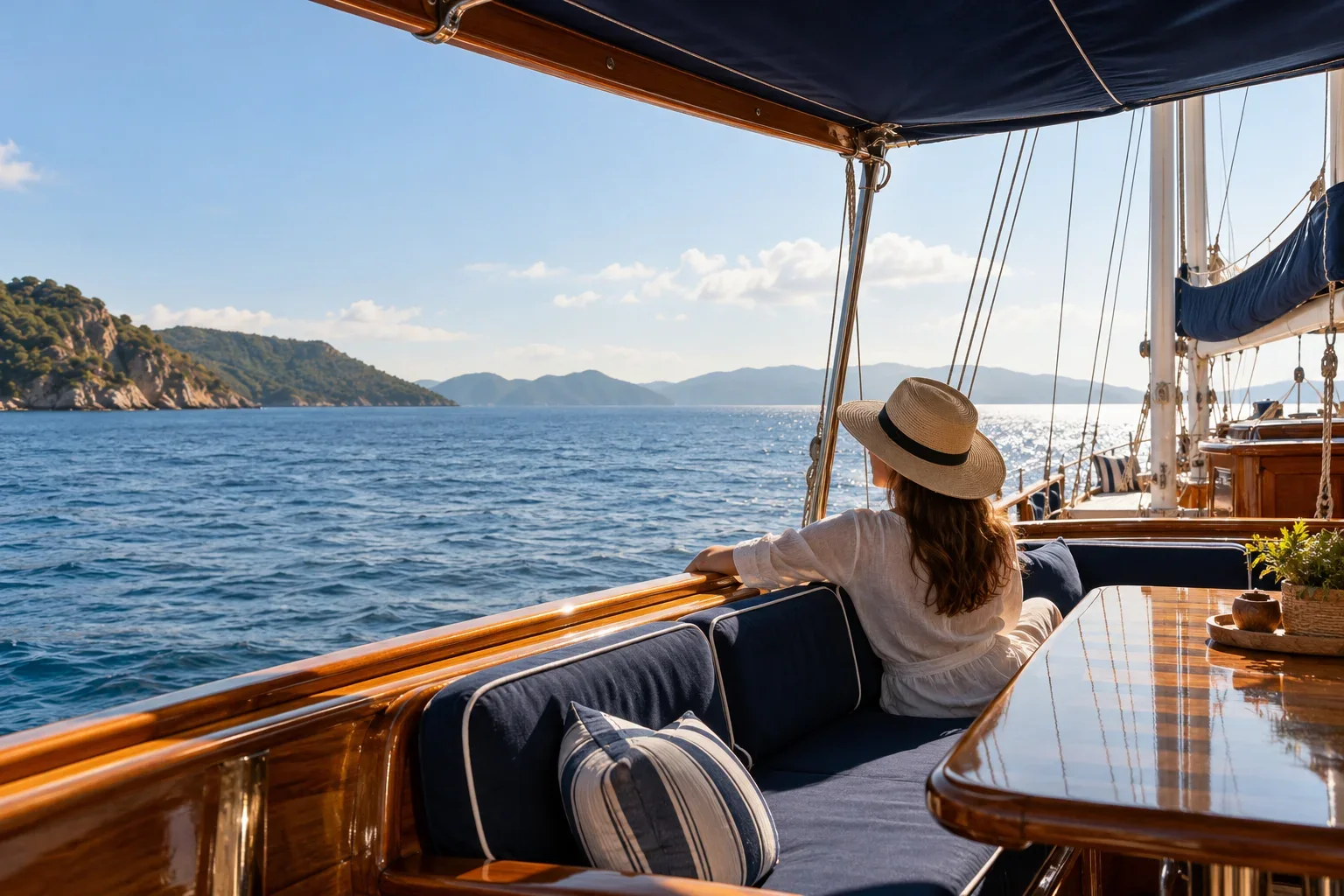
If you or someone in your group gets seasick, a yacht day in Phuket can still be a good day. Preparation makes a real difference: choose a sensible route and season, talk to a pharmacist before you travel, sit in the right place and keep your eyes on the horizon.
This guide brings together general advice from the UK’s NHS and the US CDC with practical points about planning a private day aboard Ruangsri.
This article is general information, not medical advice. If you have a health condition, are pregnant or are planning for a child, speak to a pharmacist or doctor before your trip.
Quick Answer
Plan ahead, not on the boat. Ask a pharmacist about motion sickness options before the day. Choose a closer island if anyone is prone to seasickness. On board, sit where there is less motion, look at the horizon and get fresh air. Avoid heavy meals and alcohol before and during the trip.
What causes seasickness?
Motion sickness happens when your senses disagree. Your inner ear feels the boat moving, but your eyes may tell your brain something different, and that mismatch makes you feel unwell.
The CDC gives a clear example: in a cabin with no view outside, the inner ear senses motion while the eyes report that everything is still. That is why a view of the sea and sky usually helps.
Common symptoms include dizziness, nausea, vomiting, headache, feeling cold and pale, and sweating. Drowsiness is common too.
Who is more likely to feel it?
Anyone can feel seasick, but some people are more prone. According to the CDC, children under 2 are usually not affected, susceptibility is highest around ages 7 to 12, and it then declines through adulthood. People with a history of migraine, vertigo or inner-ear (vestibular) problems are also more likely to feel it.
If that sounds like someone in your group, plan for it from the start rather than leaving it to chance on the day.

Before the day: talk to a pharmacist or doctor
Pharmacies sell several motion sickness options, including tablets (some made for children), patches and acupressure bands. The NHS notes that bands do not work for everyone, and that a pharmacist can recommend the right treatment for you or your child.
Two general points from the CDC are worth knowing before you ask:
- Motion sickness medicines should be taken before the trip, not after symptoms start.
- Drowsiness is the most common side effect, so plan your day with that in mind.
For children, the CDC advises trying non-medical measures first and using medication with caution. Always follow the advice of your pharmacist or doctor and the instructions that come with any product.
Choose the island and season with the sea in mind
This is where a private charter gives you real options.
Pick a closer island. A Racha day means more time crossing open Andaman water, while Coral Island is close and easy. Koh Khai Nok is another easy, playful choice with shallow clear water. If anyone is prone to seasickness, a shorter crossing is usually the more comfortable plan. Compare routes on the Phuket island destinations page, or read our guide to Koh Khai Nok by private yacht.
Think about the season. In Thailand, the southwest monsoon brings cloudy, rainy weather between roughly mid-May and mid-October, especially on the coasts. The northeast monsoon follows from around mid-October to mid-February, and the exact timing varies from year to year. Ask how the sea usually looks around your dates when you enquire.
Let the crew read the conditions. The crew shapes the route around the day’s conditions, and the captain chooses the most suitable anchorage. A plan that changes because of the sea is a plan that is working.
On board: where to sit and what to look at
Where you sit matters. Simple habits from NHS and CDC guidance:
- Sit where there is less motion. The NHS suggests the middle of a boat, and the CDC advises avoiding the bow.
- Look at the horizon or another fixed point.
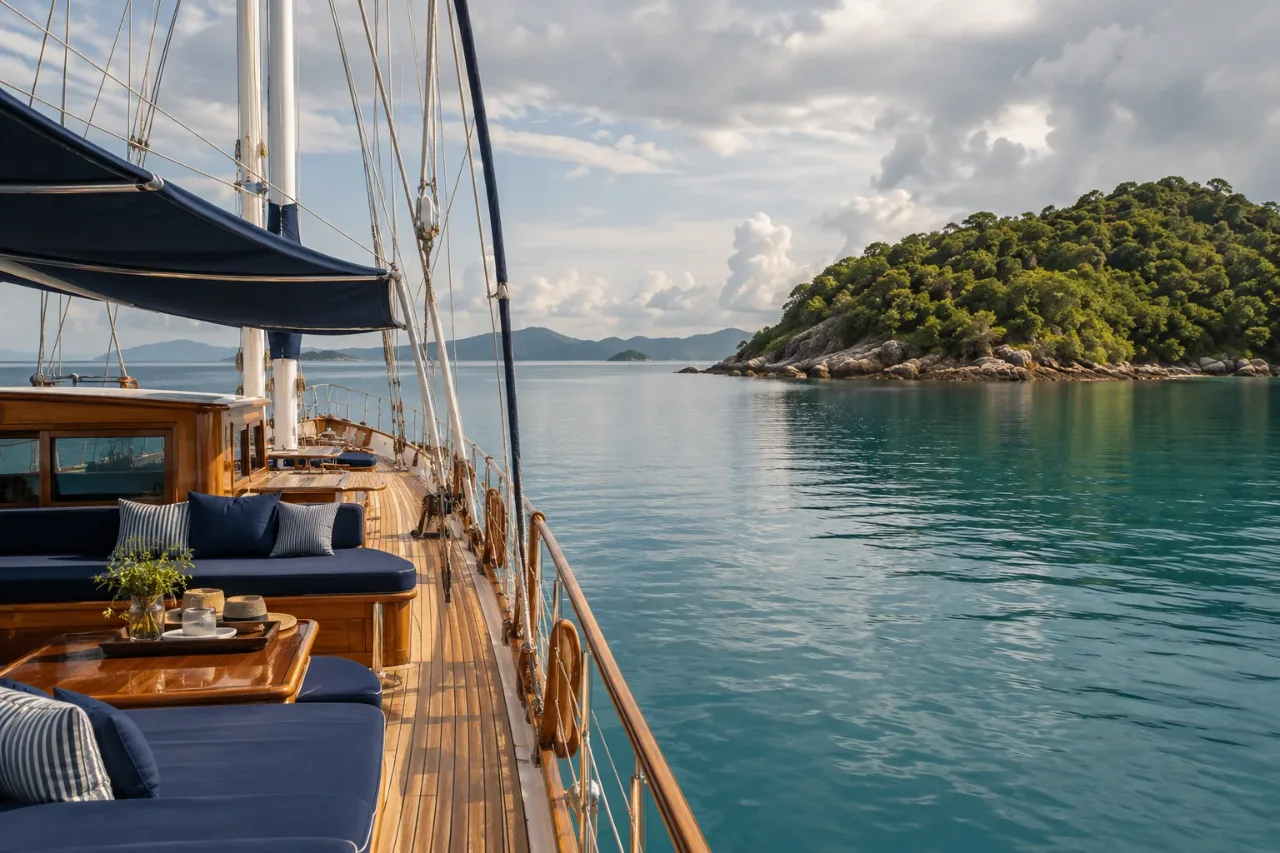
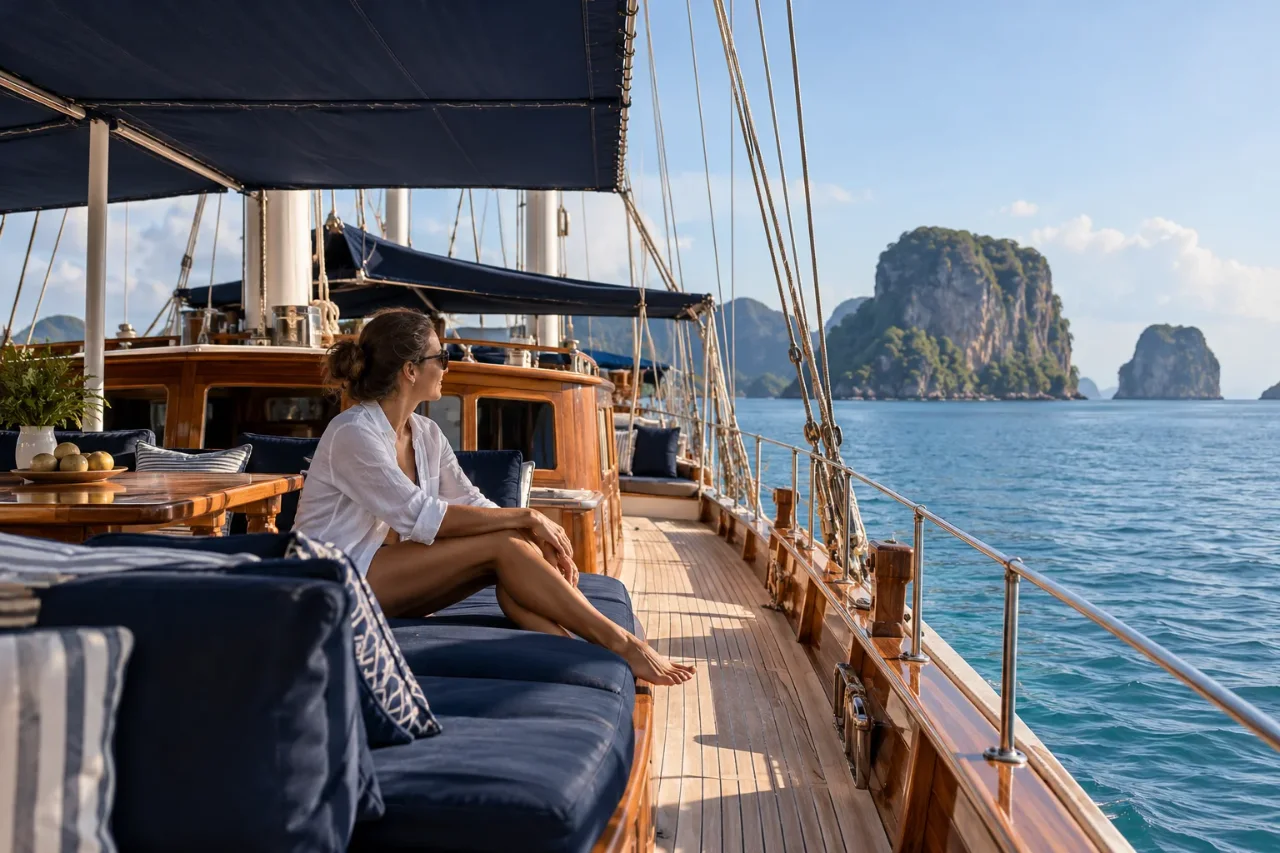
- Stay in the fresh air. Fresh air can help. Ruangsri has both open-air and covered areas on deck, so you can stay outside with a view and still keep out of the sun.
- Skip the screens. Avoid reading, films and phones, and try not to watch the waves rushing past.
- Breathe slowly. Close your eyes and breathe slowly, or practise calm, regular breathing.
Ruangsri also has an indoor lounge. If you start to feel unwell, a spot with a clear view of the horizon is usually a better choice than an enclosed space without one.
Eat, drink and rest
- Keep meals light. The NHS advises avoiding heavy or spicy meals and alcohol just before or during travel.
- Go easy on alcohol, and get a good night’s sleep. The CDC lists alcohol, smoking and lack of sleep as things that can make symptoms worse.
- Sip water through the day. It is a sensible habit in the tropical sun.
- Ginger is worth a try for some people. The NHS mentions ginger tablets, biscuits or tea.
Ask what food and drinks are arranged for your charter, so you know whether to bring your own ginger biscuits or snacks .
For a full packing list, see the “What should you bring?” section in our private yacht charter Phuket guide.
Planning a day with someone who gets seasick?
Tell the team when you enquire, and the route can be discussed with that in mind.
Travelling with children
Children aged roughly 7 to 12 are the most likely to feel motion sickness. The NHS suggests keeping them distracted with talking, music or songs. Seat them where the view is clear and the motion is lower, and speak to a pharmacist before giving any medication.
Tell the team before the day
When you enquire, you share your date, number of guests and the kind of day you want, and the team proposes a route for your enquiry. That is the moment to say that someone is prone to seasickness. The crew knows Phuket’s waters and shapes the route around the day’s conditions.
<faq-anchor></faq-anchor>
Final thought
Seasickness does not have to decide whether you go to sea. Choose a sensible route and season, speak to a pharmacist beforehand, sit mid-deck with your eyes on the horizon and keep the day light. Then the sea can become one of the highlights of the trip.
Plan a comfortable day aboard Ruangsri
Share your date, group size and any concerns about seasickness.
Frequently asked questions
Which island is easiest if I get seasick?
A closer island usually means less time crossing open water. Coral Island is close and easy, while a Racha day involves more open Andaman water. The crew still decides the route on the day according to conditions.
When should I take motion sickness medication?
The CDC says these medicines should be taken before the trip rather than after symptoms start. Ask a pharmacist or doctor which option suits you and how to take it.
Where should I sit on a yacht to feel less seasick?
Choose a spot with less motion, such as the middle of the boat rather than the bow, with a clear view of the horizon and fresh air.
Do acupressure bands work?
Some people find them helpful, but the NHS notes they do not work for everyone.
Can we change the plan if someone feels unwell?
Tell the crew straight away. The crew shapes the route around the day’s conditions. Ask how changes on the day are handled for your charter .
Article imagery is AI-generated for illustration. It does not show the actual Ruangsri yacht, confirmed services, or verified views of specific islands.