
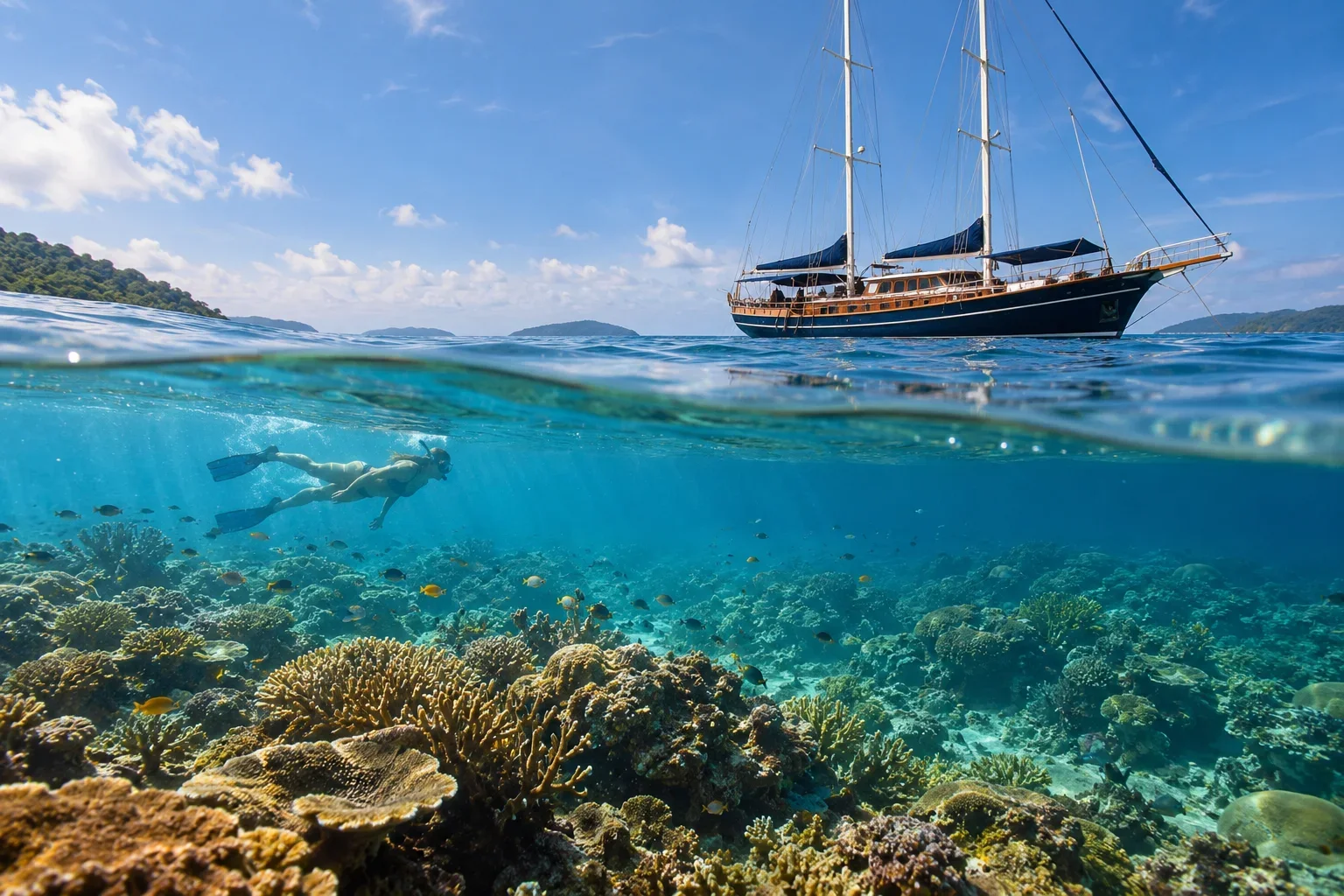
A reef-friendly boat day in Phuket comes down to a few simple habits: choose a sunscreen without the chemicals Thailand’s national parks prohibit, look at coral without touching or standing on it, leave the fish to feed themselves and take every piece of rubbish back to the boat.
This guide explains each habit in practical terms, so your group can enjoy clear Andaman water on a private yacht day and leave it exactly as you found it.
Quick Answer
Pack a sunscreen free of oxybenzone, octinoxate, 4-methylbenzylidene camphor (4MBC) and butylparaben — the four ingredients named in Thailand’s national park sunscreen rule. In the water, float rather than stand, keep your fins off the reef and never feed or chase marine life. Follow the crew on where to swim: the captain chooses the anchorage and snorkelling happens where sea conditions and local rules allow.
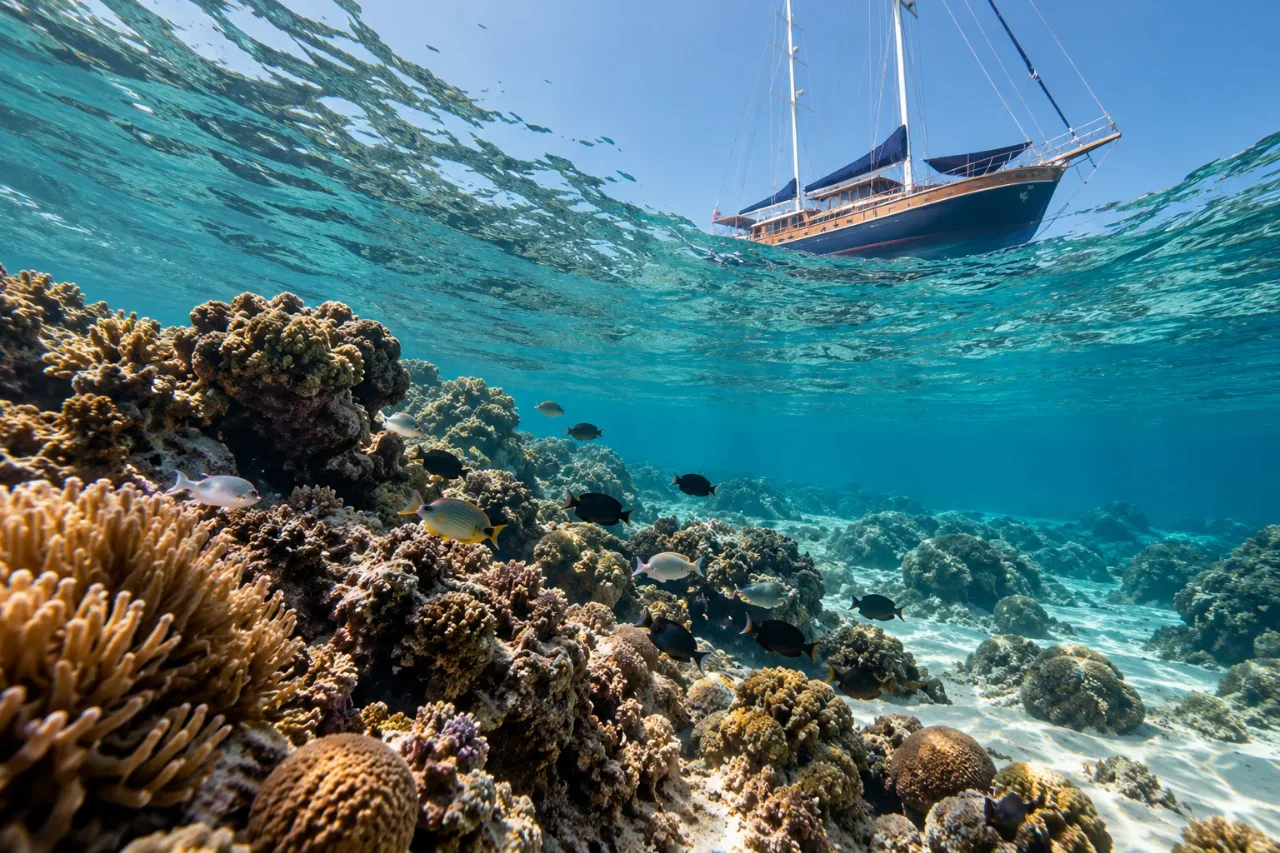
1. Why reef care matters on a Phuket boat day
The water is the reason most people book an island day. Clear, shallow bays and coral are part of what makes destinations such as Maiton and Racha appealing.
Phuket Charter’s own guidance puts it simply: beautiful water deserves respect, and a premium day should protect the place that makes it possible. You can read the short “Charter With Care” notes on our Phuket island destinations page.
2. Sunscreen: what Thailand’s rule actually says
In 2021, Thailand’s Department of National Parks, Wildlife and Plant Conservation (DNP) published an announcement in the Royal Gazette prohibiting visitors from bringing in or using sunscreens that contain four chemicals inside national parks:
- Oxybenzone (also listed as Benzophenone-3 or BP-3)
- Octinoxate (Ethylhexyl methoxycinnamate)
- 4-Methylbenzylidene camphor (4MBC)
- Butylparaben
The DNP introduced the measure because of the number of visitors in marine national parks, citing research that these chemicals damage coral larvae, disrupt coral reproduction and contribute to bleaching. The announcement sets a fine of up to 100,000 baht for violations.
Does the rule apply to your route?
The rule applies inside Thailand’s national parks — the reason the DNP gives is the pressure on marine national parks. Whether a particular island stop sits inside a national park depends on the location, so we do not assume it either way in this guide.
The practical answer is easier than checking a map: pack a compliant sunscreen for every boat day. Then it does not matter which bay the captain chooses on the morning.
How to choose and use sunscreen on board
- Read the ingredient list, not just the front label. “Reef safe” is a marketing phrase, not an official standard. Check for the four names above.
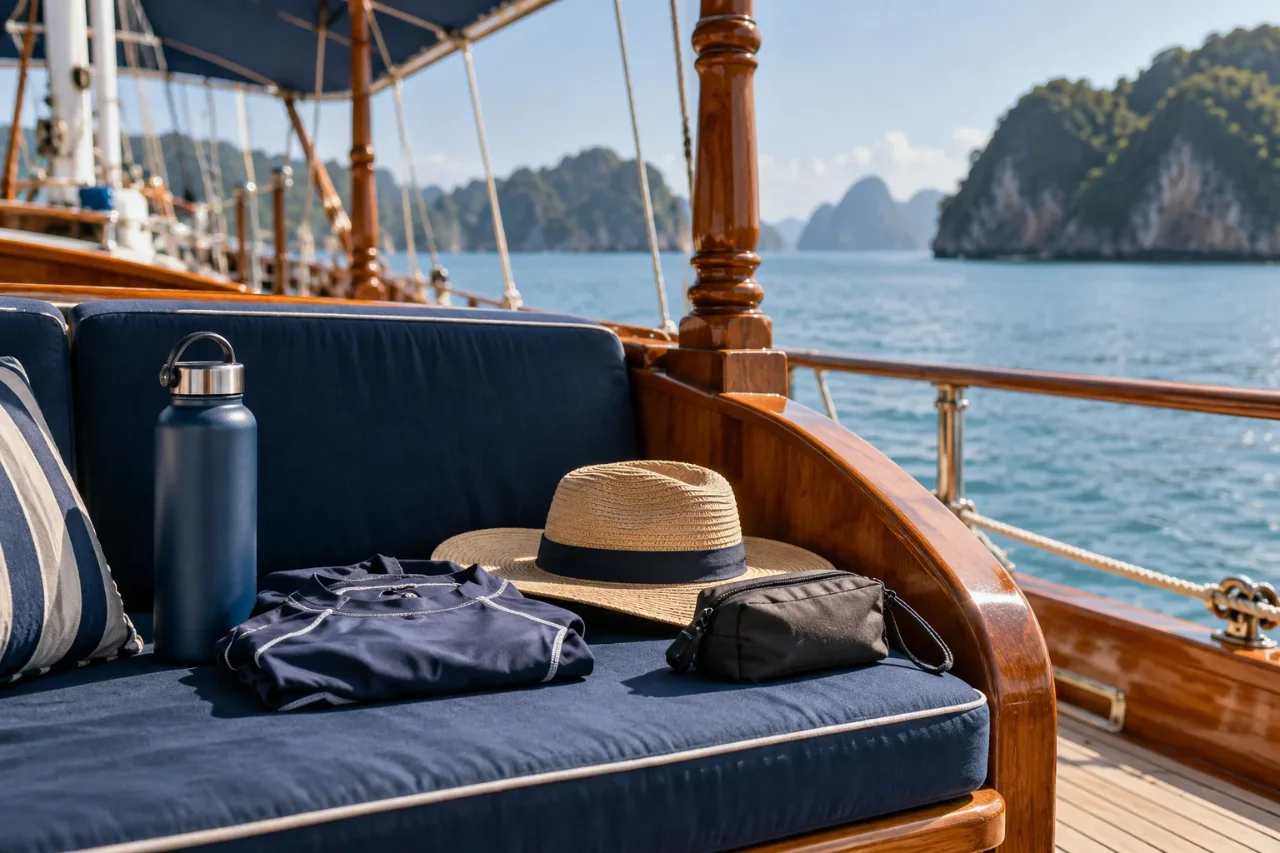
- Cover up to need less of it. A long-sleeve rash vest, a wide-brimmed hat and time in the shade reduce how much sunscreen goes into the sea.
- Apply it on deck well before you swim, rather than just before you jump in.
- Buy before the day, not in a hurry on the way to the pier.
3. In the water: look, do not touch
Coral is a living animal, and a reef that looks like rock can be damaged by a single knee, hand or fin. Our guidance on this is clear: enjoy reef areas visually and avoid standing on, collecting or damaging marine life.
A few habits make that easy:
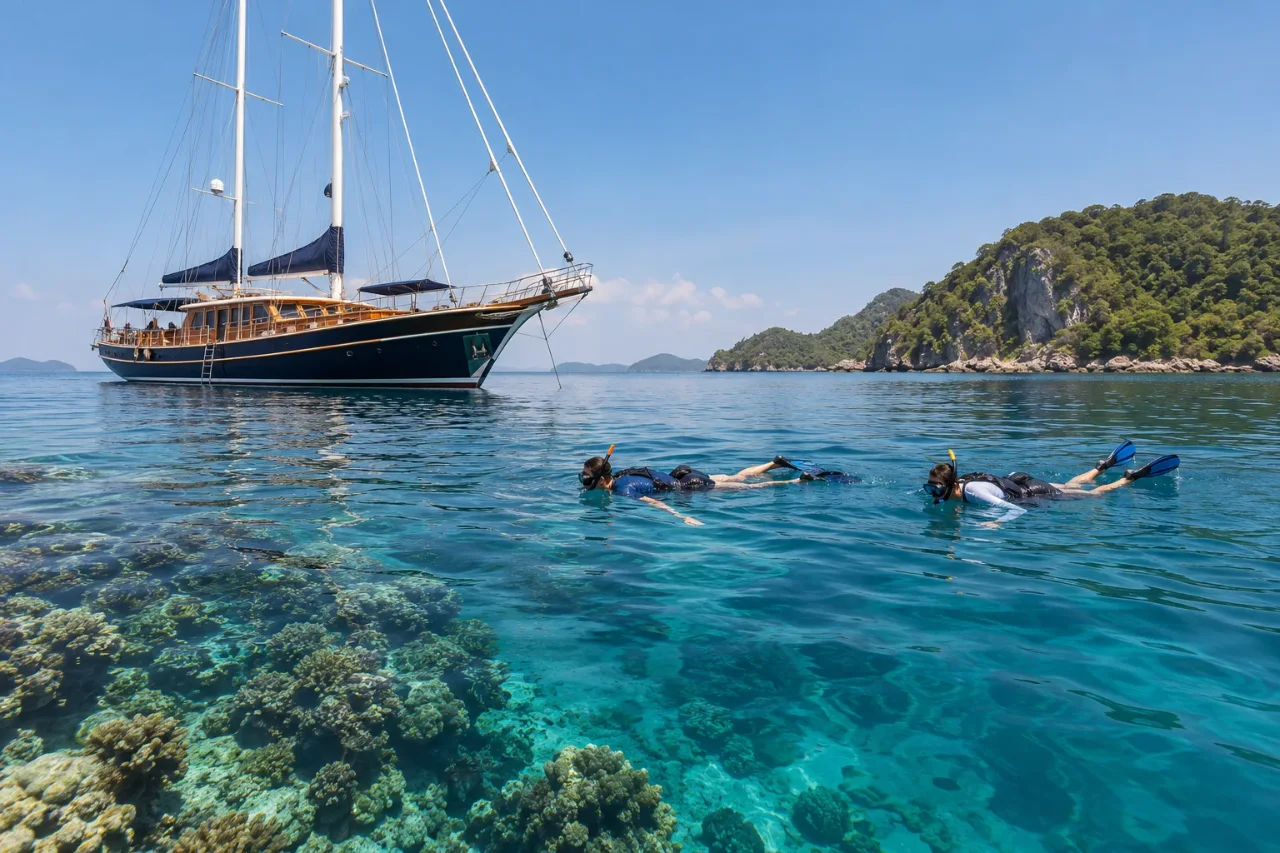
- Float, do not stand. If you need a rest, swim back to sand or to the boat. A snorkel vest helps less confident swimmers stay relaxed and horizontal.
- Watch your fins. Most reef damage from swimmers comes from fins in shallow water. Keep your legs up and kick gently.
- Keep your distance in shallow areas. If the water is getting too shallow to float, turn around.
- Leave everything where it is. Shells, coral fragments and sand stay on the island.
- Follow the crew’s guidance on where to swim. The captain selects the anchorage for the conditions, and snorkelling takes place where sea conditions and local rules allow.
If your group wants snorkelling to be a central part of the day, our planned snorkelling guide covers it in more detail.
4. Fish and wildlife: no feeding, no chasing
Feeding fish is tempting, especially where they gather close to the beach. Please do not. Our guidance is to keep your distance, avoid chasing marine animals and not feed fish.
We covered this for Koh Khai Nok, where fish are easy to see close to shore, in the fish and marine etiquette section of our Koh Khai Nok guide. The same habits apply wherever you swim:
- Bread, biscuits and leftovers from lunch do not belong in the sea.
- Let turtles, rays and schools of fish move away on their own terms.
- Avoid flash or bright lights close to marine animals when you take photos.
Plan a Day That Leaves the Water as You Found It
Tell the team your date, group size and how much time you want in the water. The route and swimming stops are planned around the conditions on the day.
5. Take every piece of rubbish back
On an open deck, small items blow away easily. A wrapper, a bottle cap or a hair tie that goes overboard does not come back.
- Keep loose packaging inside a bag, not on a table or the deck rail.
- Bring a reusable water bottle and ask the team whether refills are available on your charter.
- Take beach rubbish back to the boat rather than leaving it by a bin that may already be full.
6. Respect local rules — and a flexible route
Island access and activities can change with weather, local restrictions and operational conditions. That is one reason Phuket Charter does not promise a fixed bay: the crew shapes the route around the day’s conditions, and time ashore depends on local conditions and landing access.
If a ranger, beach official or crew member asks your group to move, stay out of an area or change what you are doing, follow the instruction. Local rules exist because popular bays see a lot of visitors.
7. Why a private yacht makes reef care easier
On a private charter, the yacht is yours alone — no shared decks and no mixed groups. That has a quiet advantage for reef care:
- One briefing reaches everyone. Your group hears the same guidance at the same time.
- Your pace, not a schedule. Nobody is rushed into the water, so there is time for less confident swimmers to get comfortable before they reach the reef.
- Not everyone has to swim. Guests who prefer to stay aboard can enjoy the deck and shade while others snorkel.
Ruangsri is an 81-foot Mediterranean-style Turkish gulet with an open deck, departing from Chalong Bay. Meet the yacht on The Boat, or read our private yacht charter guide to Phuket for how a private day works.
A short reef-friendly checklist
- Sunscreen checked for the four restricted ingredients
- Rash vest or light cover-up and a hat
- Snorkel vest for anyone less confident in the water
- Reusable water bottle
- A small bag for your own rubbish
For the full list of what to bring, see our planned packing guide. Plan Your Island Day
Clear water, a light footprint.
Share your date, number of guests and the kind of day you have in mind. The team will confirm availability, the proposed route, inclusions and the quotation for your enquiry.
<faq-anchor></faq-anchor>
Final thought
A reef-friendly boat day is not about doing less. It is about arriving with the right sunscreen, swimming with care and taking everything home again — so the water is just as clear for the next people who come to see it.
Frequently asked questions
Which sunscreen ingredients are banned in Thailand’s national parks?
The DNP announcement names oxybenzone (benzophenone-3), octinoxate (ethylhexyl methoxycinnamate), 4-methylbenzylidene camphor (4MBC) and butylparaben. Check the ingredient list before you travel.
Are the islands on our route inside a national park?
It depends on the location, and we do not want to guess. Ask the team when you enquire. The simplest approach is to bring a sunscreen without the four restricted ingredients for every boat day.
Can we feed the fish at Koh Khai Nok?
Please do not. Our guidance is to keep your distance, avoid chasing marine animals and not feed fish.
Can I take a shell or piece of coral home?
No. Enjoy reef areas visually and avoid collecting or damaging marine life.
Is sunscreen provided on board?
Ask the team when you book. Plan to bring your own so you know exactly what is in it.
Article imagery is AI-generated for illustration. It does not show the actual Ruangsri yacht, confirmed services, or verified views of specific islands.