
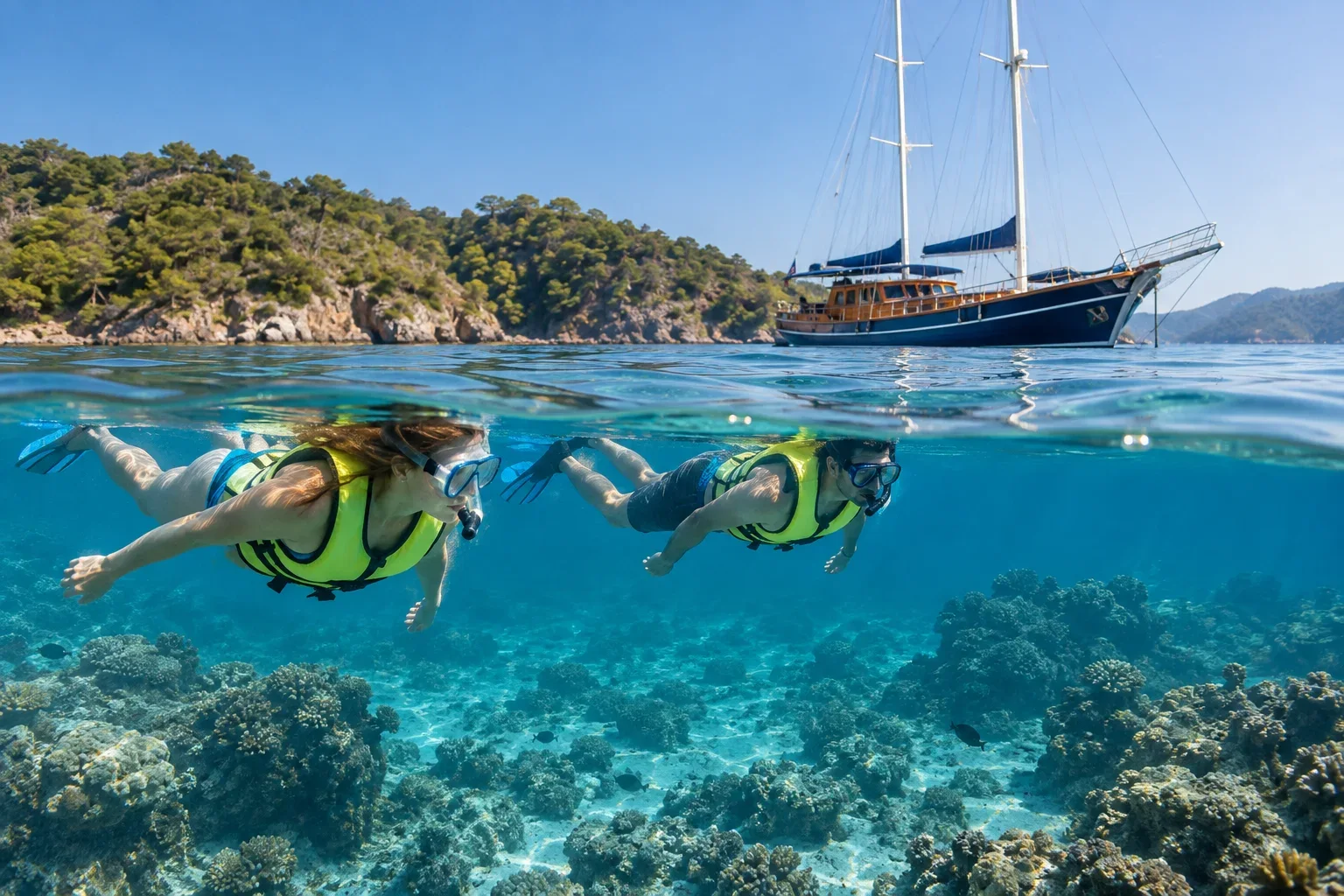
You do not need to be an experienced snorkeller to enjoy the water on a private yacht day from Phuket. What makes the difference is choosing the right island for your group, letting the crew pick a spot that suits the day’s conditions and bringing a few simple habits into the water.
This guide is for first-timers and casual swimmers. It covers what you can realistically expect at each of Phuket Charter’s four islands, basic safety and comfort, reef etiquette and the questions worth asking before you book.
Quick Answer
For beginners, start somewhere shallow and clear, snorkel with a buddy, wear a vest and never touch or stand on coral.
Koh Khai Nok and Coral Island are the gentler introductions, with shallow clear water. Racha and Maiton suit guests who want reef and coral. On every route, the captain chooses the anchorage based on conditions, and snorkelling happens where sea conditions and local rules allow.
What snorkelling from a private yacht is like
On a shared boat tour, the water stop runs to a group schedule. On a private charter, the yacht is yours alone for the day, with no mixed groups and no shared-tour timetable. That gives nervous swimmers something valuable: time.
You can watch others first, get in when you feel ready and come back to the deck whenever you want. Aboard Ruangsri, there is a choice of open-air and covered areas, so non-snorkellers have shade and somewhere comfortable to wait.
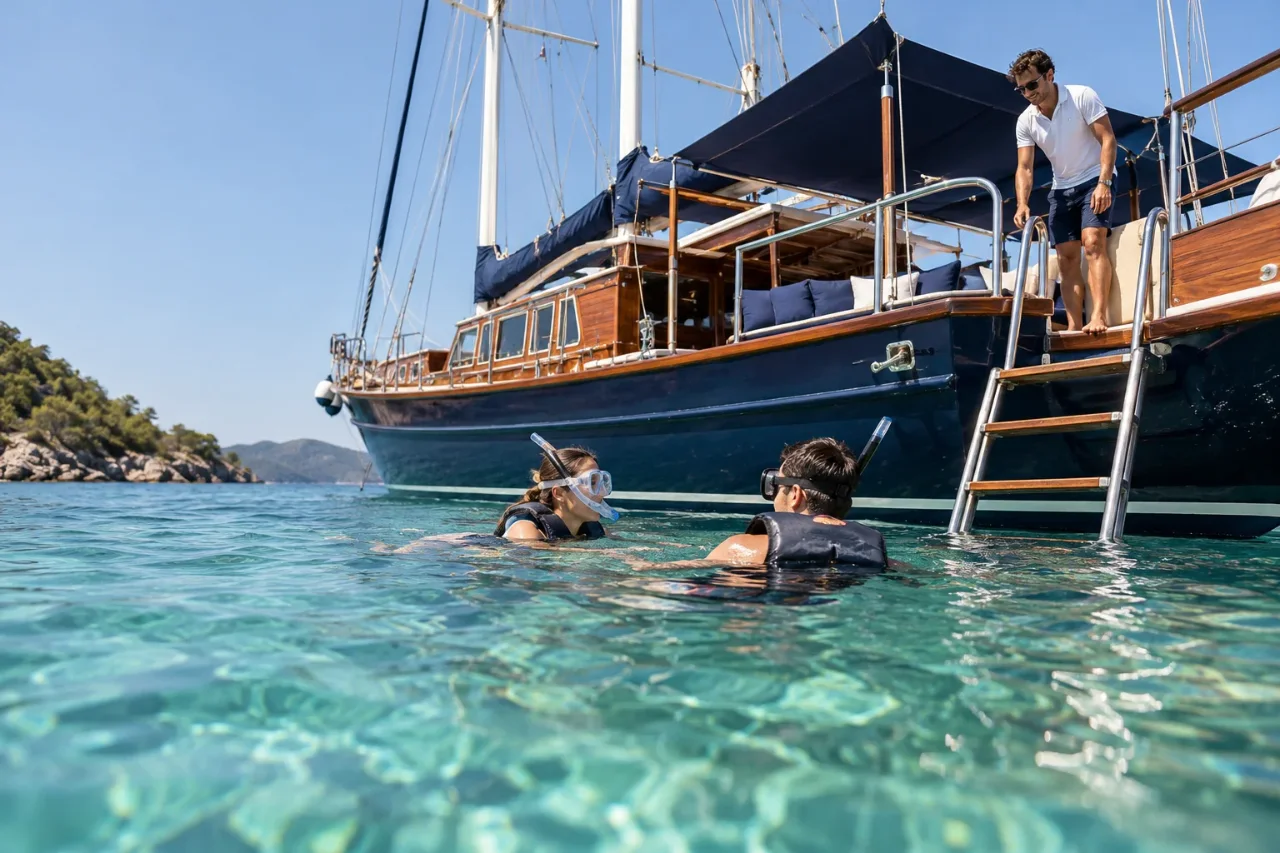
What you might see around each island
Every island has a different character underwater. These are realistic expectations, not promises — marine life is wild and visibility changes from day to day.
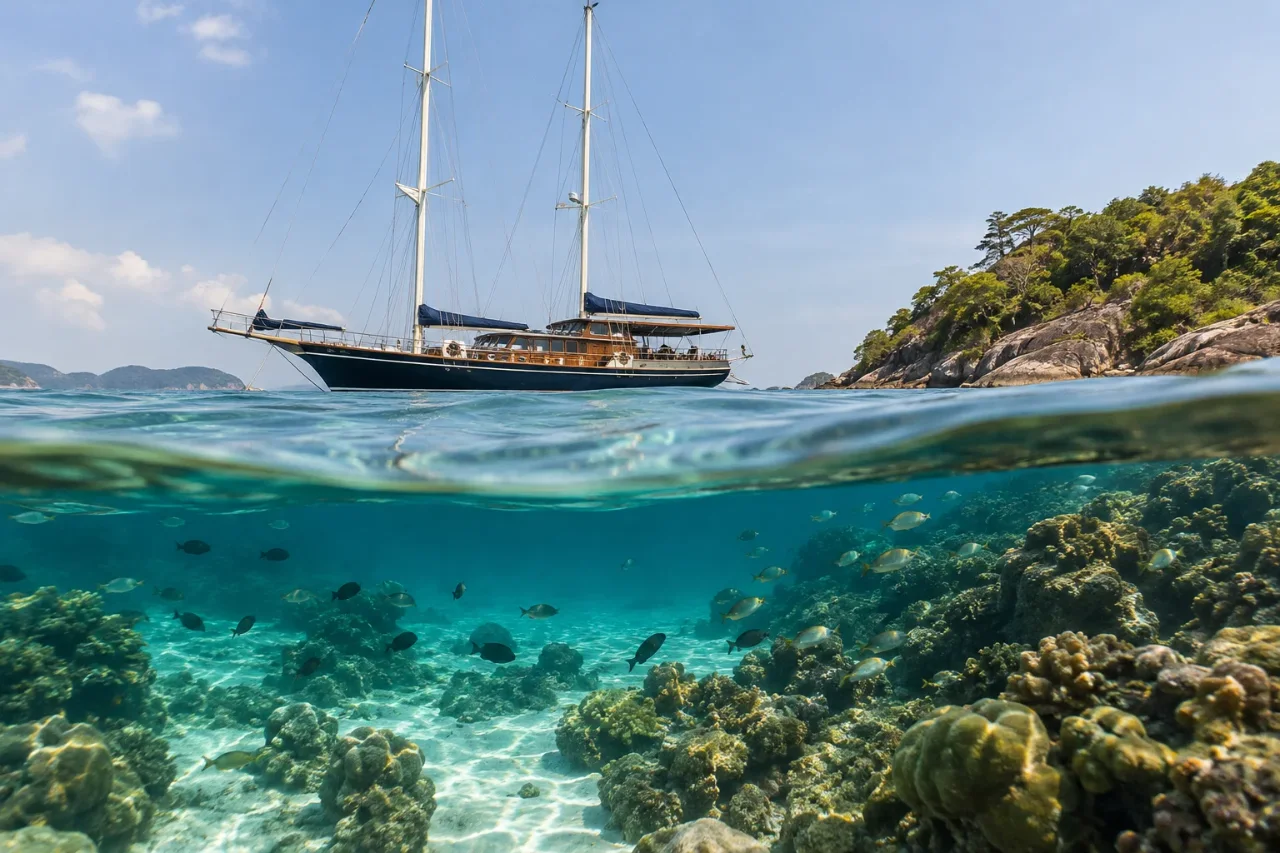
Koh Khai Nok — shallow water and fish close by
Shallow clear water and visible fish make Koh Khai Nok approachable for casual swimmers and beginner snorkellers. It can be lively when day-trip boats are on the beach. Read more in our Koh Khai Nok guide.
Coral Island — an easy, close-to-Phuket introduction
Coral Island, also known as Koh Hae, offers clear shallow water, sandy beaches and casual snorkelling, and suits families and mixed groups.
Racha — reef snorkelling on a full island day
Racha is known for clear water and coral-reef snorkelling; the Tourism Authority of Thailand highlights the reef around Ao Khon Khae on the east side of Ko Racha Yai. It is a longer day out, better suited to guests who already feel comfortable in the water.
Maiton — clear water and coral in a calmer setting
Maiton has clear water, coral and a more secluded atmosphere. Access rules for the island can change, so ask the team about the current situation for your date. Our Maiton Island guide explains more.
| Island | Water | Beginner fit |
|---|---|---|
| Koh Khai Nok | Shallow, clear, fish easy to see | Easy first try |
| Coral Island | Clear and shallow, casual snorkelling | Easy first try |
| Racha | Clear water, coral reef | Better once you feel confident |
| Maiton | Clear water and coral | Calm setting; ask about access |
Conditions decide where you snorkel
The single most important thing to accept as a beginner: the sea decides. The captain selects the most suitable anchorage on the day, and the crew shapes the route around the conditions.
The US National Park Service gives simple advice for ocean snorkelling: check the water conditions before you get in, stay aware of the ocean when entering and leaving, and “when in doubt, stay out”. If the crew suggests a different spot — or a swim instead of a snorkel — that is the system working, not the day going wrong.
Season matters too. In Thailand, the southwest monsoon brings cloudy, rainy weather between roughly mid-May and mid-October, especially on the coasts, and the timing varies from year to year.
Simple safety and comfort habits for beginners
None of this is complicated, and none of it replaces the crew’s instructions on the day.
- Snorkel with a buddy. The National Park Service advises never snorkelling alone, because a buddy can help if something goes wrong.
- Check your gear before you get in. Make sure the mask and fins fit properly and defog the mask first. A leaking mask is the most common reason beginners give up early.
- Wear a vest. NOAA notes that novice snorkellers can use a snorkel vest to stay afloat. Under Thai regulations in effect since April 2025, tourists snorkelling near coral reefs must wear a life vest, unless they hold a recognised freediving certificate.
- Rest without standing. If you need a break, lie on your back or float in a seated position rather than standing on the reef.
- Tell the crew about swimming ability. Mention anyone who is a weak swimmer or nervous in open water when you book and again on board.
- Keep children close. Children should always be supervised in the water, even in the shallows.
- Protect yourself from the sun. Your back is exposed while you snorkel, so a rash vest or swim shirt helps.
If you have a medical condition, or are unsure whether snorkelling is right for you, check with your doctor before you travel.
Planning your first snorkel? Tell the team your group’s swimming confidence on WhatsApp, and they can suggest an island that fits.
Reef etiquette: look, don’t touch
Coral is a living animal, and it is far more fragile than it looks. NOAA notes that even a minor brush with hands, fins or gear can damage it.
- Don’t touch anything alive. Thailand’s diving and snorkelling regulations forbid contact with marine organisms under all circumstances.
- Don’t stand on coral. If you must stand, stand on sand — never on coral or seagrass.
- Don’t feed the fish. Feeding fish is prohibited in reef areas under the same regulations.
- Mind your fins. Kicking up sand can smother coral, so keep your feet up and your movements slow.
- Leave shells and coral where they are, and take any rubbish back to the yacht.
Questions to ask before you book
Every charter is quoted individually: the team confirms availability, the proposed route, inclusions and a quotation for each enquiry. If snorkelling matters to your group, ask:
- Is snorkel gear provided, and in which sizes — including for children?
- Are life vests or snorkel vests available on board for snorkellers?
- Which island would you suggest for beginners on our date?
- What happens if conditions are not right for snorkelling that day?
- Is there a calm spot for nervous swimmers to try first?
Asking these up front means nobody arrives at the anchorage unsure what to expect.
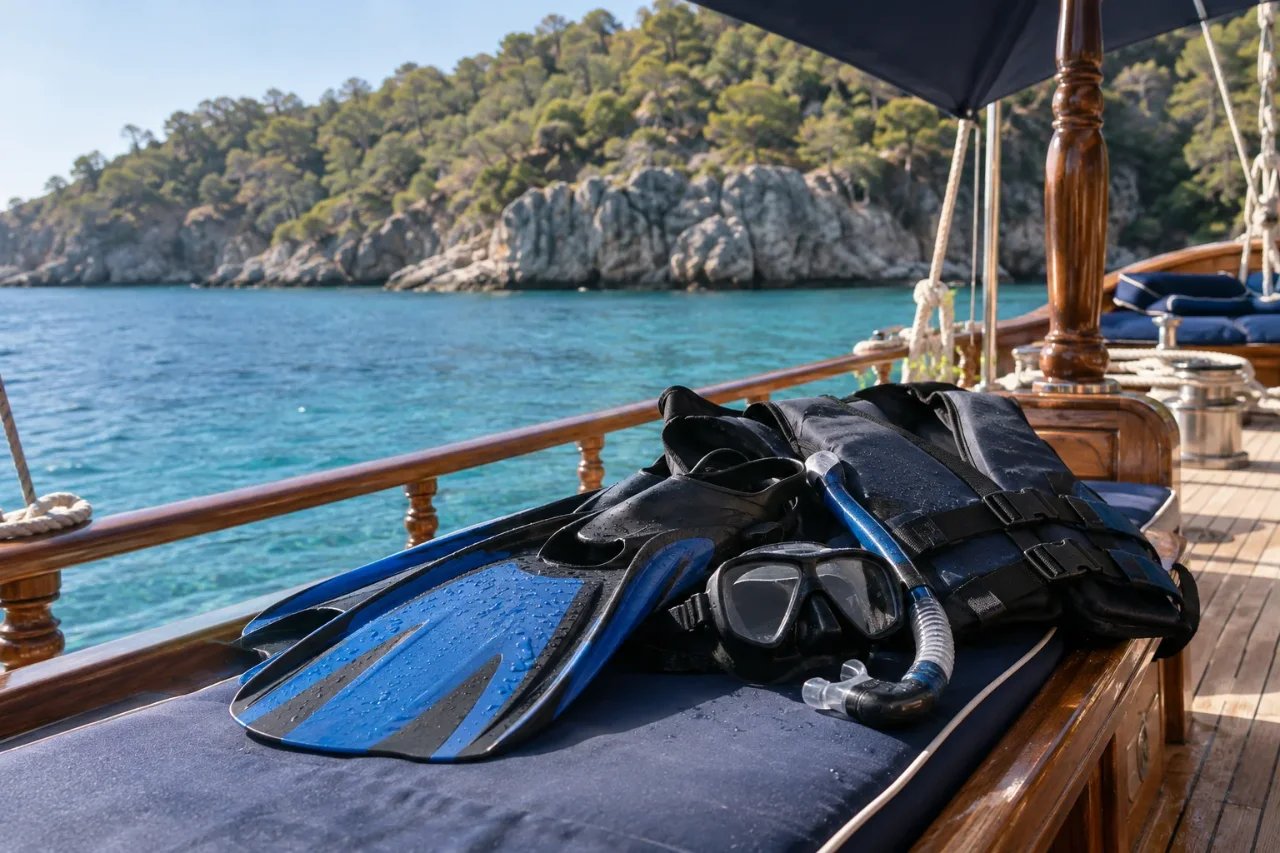
Is a private yacht a good way to try snorkelling?
For many beginners, yes. There is no group to keep up with, the yacht is your base between swims and non-swimmers can stay comfortable on deck. Ruangsri takes up to 40 guests on a day cruise, so mixed groups — confident swimmers, first-timers and those who would rather watch — can share the same day.
For the bigger picture on routes, timing and what a private charter includes, see our private yacht charter guide to Phuket.
Plan Your Snorkelling Day
Clear water, at your own pace.
Share your date, group size and how confident everyone feels in the water, and the Phuket Charter team can suggest a route around it.
<faq-anchor></faq-anchor>
Final thought
Good snorkelling for beginners is less about the island and more about the setting: calm water, a buddy, a vest and the freedom to take your time. A private yacht gives you that space — the reef rewards you for leaving it exactly as you found it.
Frequently asked questions
Do I need to be a strong swimmer to snorkel?
You should be comfortable in the water, but many beginners snorkel in shallow, clear spots wearing a vest. NOAA notes that novice snorkellers can use a snorkel vest to stay afloat. Tell the crew about anyone who is nervous or a weak swimmer.
Which island is easiest for first-time snorkellers?
Koh Khai Nok and Coral Island both offer shallow, clear water suited to casual snorkelling. The captain still chooses the spot based on the day’s conditions.
Is snorkel gear included?
Ask the team when you enquire. Inclusions are confirmed with each quotation.
Will we see turtles or dolphins?
Wildlife sightings are never certain. Plan around clear water and fish, and treat anything larger as a bonus.
Can I touch or feed the fish?
No. Thai regulations forbid contact with marine organisms and prohibit feeding fish in reef areas.
Article imagery is AI-generated for illustration. It does not show the actual Ruangsri yacht, confirmed services, or verified views of specific islands.