
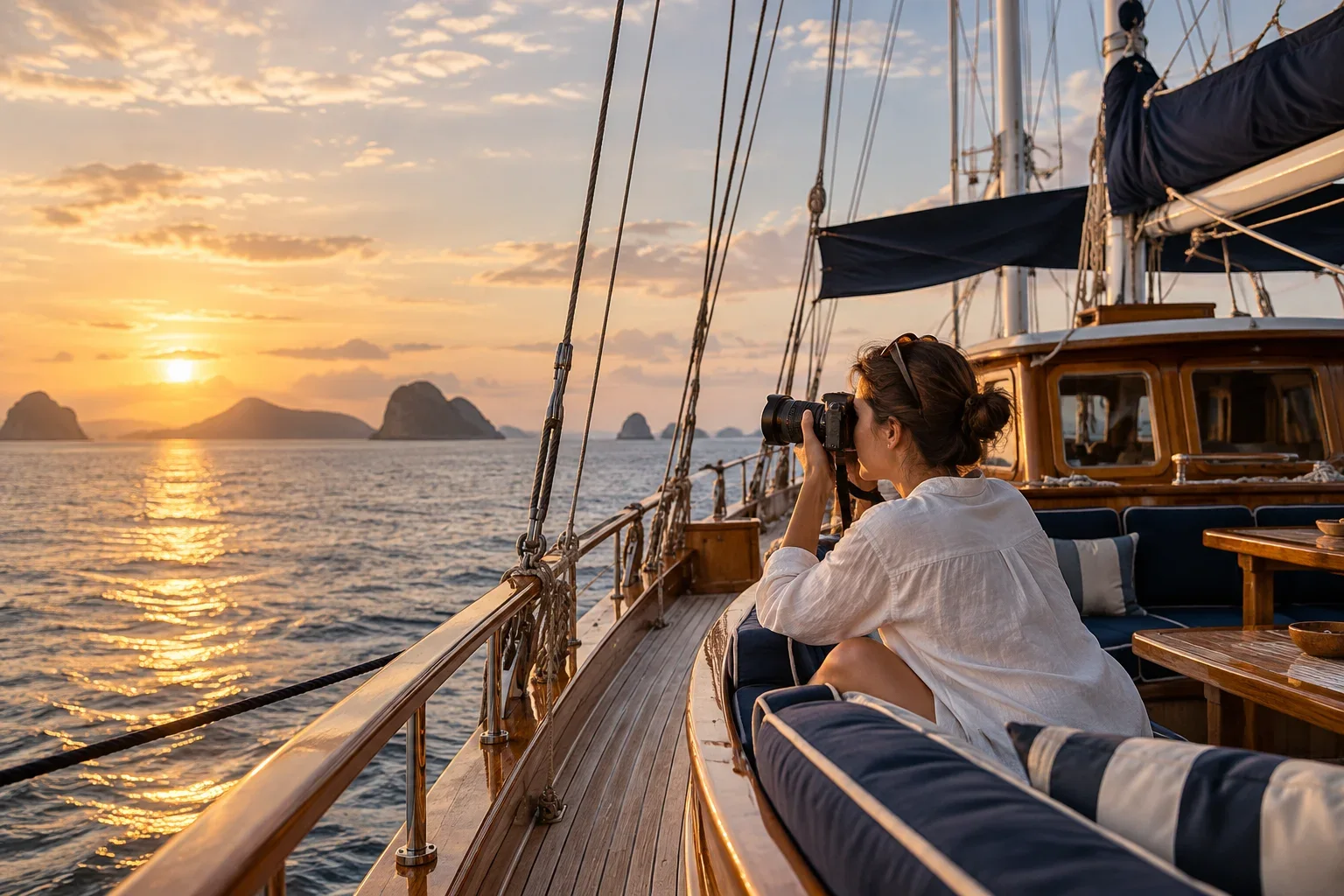
Great photos on a private yacht day in Phuket come from three things: planning around the light, using the yacht itself as part of the frame, and keeping your phone or camera safe from salt water.
This guide covers practical tips for a day aboard Ruangsri — when to shoot, where to stand, how to protect your gear, how to get a group photo everyone likes, and what to know before bringing a drone.
Quick Answer
Shoot in the softer light of the morning and late afternoon, use the masts, rails and timber deck to frame your pictures, and keep phones in a dry bag between swims. Use a tested waterproof pouch if you want photos in the water. If you plan to bring a drone, note that drones in Thailand must be registered with both the NBTC and CAAT — and always ask the team before flying from the yacht.
1. Plan the day around the light
The light changes the picture more than any setting on your phone.
- Morning: softer light, calmer colours and fewer harsh shadows on faces. Good for portraits on deck soon after boarding.
- Midday: bright overhead sun makes water look vivid from above but creates squinting faces and dark eye shadows. Use the covered areas aboard for portraits and save the open deck for wide shots of the water.
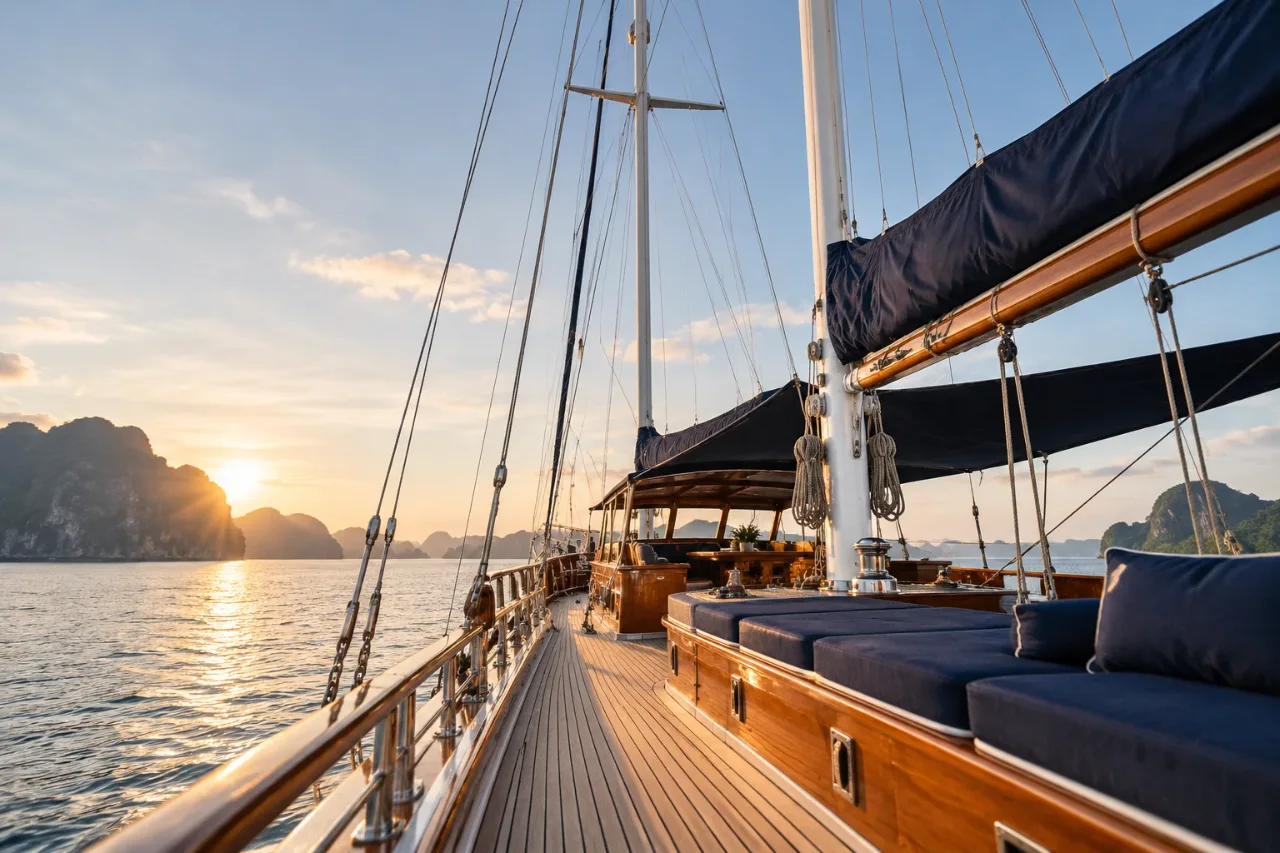
- Late afternoon and golden hour: warm, low light flatters skin, timber and sails. This is the moment the Sunset Cruise is built around — a golden-hour sail.
If photographs matter a lot to your group, mention it when you enquire so the timing of the day can be discussed with the light in mind.
2. Use the yacht as part of the frame
Ruangsri is a Turkish gulet with a two-mast silhouette and warm timber character. That gives you more to work with than a plain white boat.
Ideas that work on a gulet
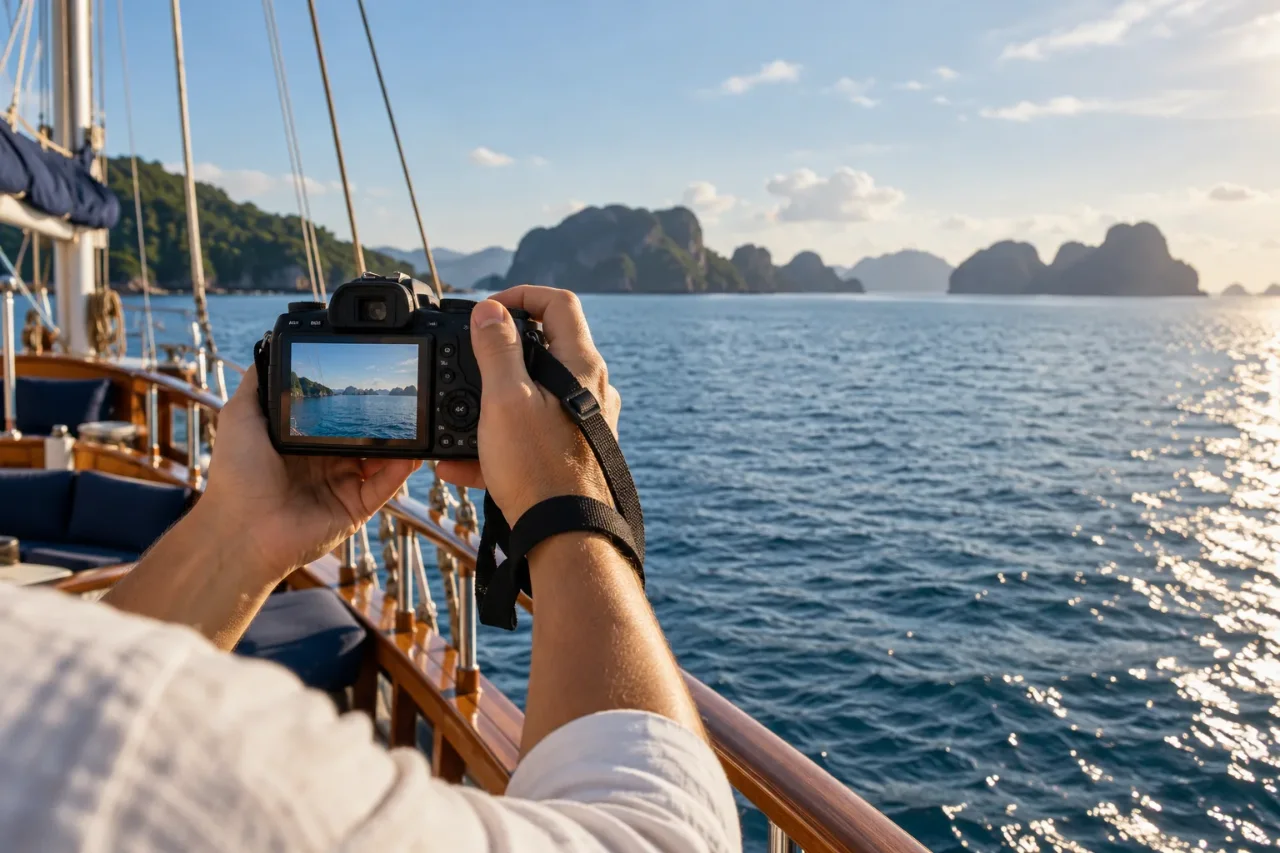
- Masts as vertical lines. Shoot upward from the deck with a mast running through the frame, or place a person beside a mast for scale.
- Rails and deck lines. Let the rail or deck boards lead the eye toward the horizon or toward your subject.
- Timber and texture. Close-ups of hands, glasses or details on warm wood tell the story of the day as well as wide shots.
- The open deck for wide shots and the lounge or covered areas for quieter, shaded portraits.
Simple habits that improve every shot
- Keep the horizon level — tilted horizons are the most common reason sea photos look “off”.
- Clean the lens often. Salt spray and sunscreen fingerprints soften every image.
- Step back from the edge, not toward it. Safe footing matters more than the perfect angle; follow the crew’s guidance when the yacht is moving.
3. Protect phones and cameras from water and salt
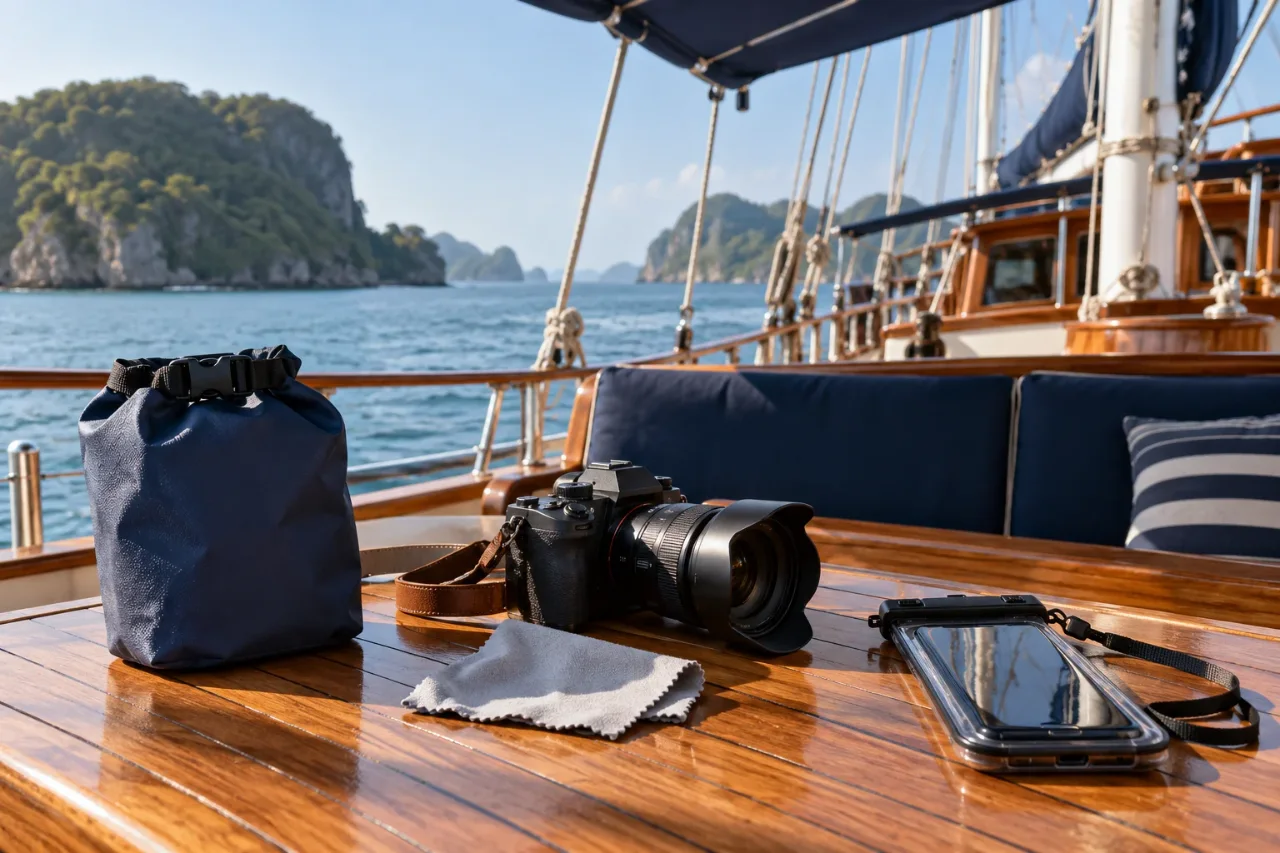
- Use a dry bag for phones, cameras and power banks when you are not shooting, especially when boarding, swimming or going ashore.
- Do not rely on a water-resistance rating in the sea. Check your manufacturer’s guidance; salt water and sand are different from a quick rinse.
- Keep gear in the shade. Phones and cameras overheat quickly on a sunny deck.
- Wipe off salt with a soft cloth at the end of the day, and avoid changing camera lenses where spray can reach.
- Use a wrist strap or lanyard when shooting over the side.
4. Underwater phone pouches: worth it, if you test them
A waterproof pouch lets you photograph the water around you without risking your phone directly.
- Test it before the trip. Seal the empty pouch with a tissue inside and hold it under water at home. If the tissue stays dry, you are ready.
- Close it on deck, not in the water, and check the seal is clean of sand.
- Expect a less responsive touchscreen. Set up the camera before you get in, or use the volume button as a shutter if your phone allows it.
Please never stand on or hold onto coral for a better angle. Our planned reef-friendly guide explains why and how to snorkel with a light footprint. Planning a Day You Want to Remember?
Tell the Phuket Charter team your date, group size and the kind of day you have in mind. Mention if photographs are a priority — the team confirms the proposed route for each enquiry.
5. Group photos that include everyone
Ruangsri takes up to 40 guests on a day cruise, so a good group photo needs a little planning.
- Take it early, before swimming, wind and sun change everyone’s hair and energy.
- Use the open deck and arrange people in two or three rows: seated at the front, standing behind.
- Shoot a burst of photos so you have at least one where nobody is blinking.
- Use a timer and a stable surface so the person taking the photo is in it too — or ask one guest to be the photographer for that moment.
6. Sunset shots
Sunset is the shot many guests want most. For couples, our guide to romantic things to do in Phuket, including a sunset yacht evening, covers how to build an evening around it. For the photos themselves:
- Expose for the sky. Tap the bright part of the sky on your phone and lower the exposure slightly to keep the colour.
- Use silhouettes. Masts, rigging and people against a bright sky make strong, simple images.
- Keep shooting after the sun drops. The colour often deepens after sunset.
Our planned sunset cruise guide explains how a private golden-hour sail works.
7. Photograph respectfully
- Ask before photographing people outside your group, including people on other boats or on the beach.
- Ask your own guests too, especially at weddings or private celebrations where some people prefer not to appear online.
- Keep your distance from marine life. Do not chase fish or turtles for a picture, and avoid flash close to animals.
- Respect crew instructions about where you can stand or sit while the yacht is moving or anchoring.
8. Drones: regulated, and always ask first
Flying a drone in Thailand is regulated. According to the Thai government’s guidance for tourists, drones must be registered with both the National Broadcasting and Telecommunications Commission (NBTC) and the Civil Aviation Authority of Thailand (CAAT) before they can be flown legally, and CAAT registration applies to drones with cameras.
The same guidance requires third-party liability insurance of at least one million baht and limits flights to daylight, clear weather and visual line of sight. Rules can change, so check the official NBTC and CAAT portals before you travel.
Even with registration in place, ask the Phuket Charter team before you plan to fly from the yacht. Launching and landing on a moving deck with masts and rigging is not the same as flying from land, and the crew will decide what is safe on the day.
9. Want a professional photographer?
For a wedding, proposal or milestone celebration, you may want someone else behind the camera. Can a photographer be arranged for your charter? Ask the team when you enquire — and if the moment is a surprise, share the plan in advance so it can be discussed before the day.
For inspiration, browse the Phuket Charter gallery to see Ruangsri, life aboard and the Andaman setting.
Plan Your Private Yacht Day
The next photos could be yours.
Share your preferred date, number of guests and the occasion. The team will confirm availability, the proposed route, inclusions and the quotation.
<faq-anchor></faq-anchor>
Final thought
The best yacht photos rarely come from rushing. Shoot the good light, use the lines of the yacht, keep your gear dry — and leave enough time to enjoy the day without a screen in front of you.
Frequently asked questions
What is the best time of day for photos on a yacht?
Morning and late afternoon usually give the softest, warmest light. The Sunset Cruise is planned around golden hour.
Can I fly a drone from the yacht?
Drones in Thailand must be registered with both the NBTC and CAAT. Even then, ask the team before your charter — the crew decides whether flying from the yacht is safe on the day.
Is it safe to bring a camera on board?
Yes, with sensible care: keep it in a dry bag between shots, out of direct sun, and wipe off salt at the end of the day.
Can you arrange a professional photographer?
Ask the team when you enquire. Let them know the occasion and what kind of photos you hope for.
Article imagery is AI-generated for illustration. It does not show the actual Ruangsri yacht, confirmed services, or verified views of specific islands.