
A first time yacht charter starts with a simple conversation about the people travelling, the date and the experience they want. You do not need to arrive with a finished itinerary or understand nautical terms before asking about a private day in Phuket.
The six steps below take you from the first enquiry to the day aboard. They distinguish preferences you can express from arrangements the team must confirm, including the schedule, meeting point, route and quotation. That makes the process easier to follow without inventing a package or promising a particular stop.
Quick Answer
- Begin with your date, guest count and the main experience your group wants from the day.
- Review a written proposal and clarify inclusions, practical needs and booking terms before committing.
- Follow confirmed arrival instructions and the crew’s briefing, keeping route and activity expectations flexible.
1. Describe your first time yacht charter in ordinary language
Start with what you want to enjoy. You might want time with friends, an island-oriented outing, an evening atmosphere or a celebration. A short description helps the team understand the purpose of the day before discussing details.
Send the preferred date and actual guest count, including any children. Mention alternative dates if you have them, but do not assume availability. Add any boarding concern or other practical need early so that it can be discussed before the proposal becomes detailed.
You do not have to choose an island immediately. If you are unsure, say whether scenery, swimming interests or time together aboard matters most. The private yacht charter guide gives a broader introduction to this conversation.
Keep one person responsible for the enquiry if several guests are involved. That reduces conflicting messages and helps the team work from a consistent guest count. The organiser can gather preferences without promising activities or timings before they have been confirmed.
2. Discuss a route that fits the people travelling
Once the team understands your priorities, discuss the proposed outing. Ask how the route relates to the experience you want and which elements depend on conditions or access. A suggested island sequence is not an unconditional promise about the day.
The captain assesses the route and anchorage. Your role is to communicate preferences and concerns clearly, including whether some guests intend to remain aboard. A plan that respects different interests can work better than one built around activities everyone is assumed to enjoy.
Read the seasonal planning guide for background, while keeping current conditions separate from monthly patterns. Ask how the team communicates updates and what alternatives may be discussed if the original preference does not fit the day.
Private use also has a specific meaning. The private yacht versus shared tour comparison explains the difference between travelling with your own group and joining unrelated guests. It does not mean that public beaches or island stops become exclusive to your party.

3. Read the proposal and ask what remains unclear
A useful proposal makes the planned arrangement concrete. Look for the date, guest count, proposed schedule, route outline and quotation. Check that it reflects the practical needs and preferences you raised, rather than assuming those details have been understood.
Separate confirmed inclusions from requests and optional items. Food, drinks, equipment, transport and celebration arrangements should be explicitly described if they affect your decision. A photograph or a general experience page is not a substitute for the written proposal.
| Before confirming | What to clarify |
|---|---|
| Group and date | Correct numbers and intended day |
| Proposed outing | Schedule, route expectations and flexibility |
| Arrangements | What is included and what is separately requested |
| Practical needs | Boarding questions and relevant guest preferences |
| Booking terms | Payment, changes and cancellation information from the team |
Ask for the relevant terms directly and read them before committing. This guide does not state a deposit amount, cancellation policy or refund entitlement. If any important point is ambiguous, ask a specific question and keep the answer with the proposal for reference.
4. Prepare your group and pack for the confirmed plan
Once arrangements are confirmed, send guests a concise practical message. Include the meeting information exactly as supplied, a contact person and any instructions from the team. Avoid replacing a confirmed location with a general map search result around Chalong Bay.
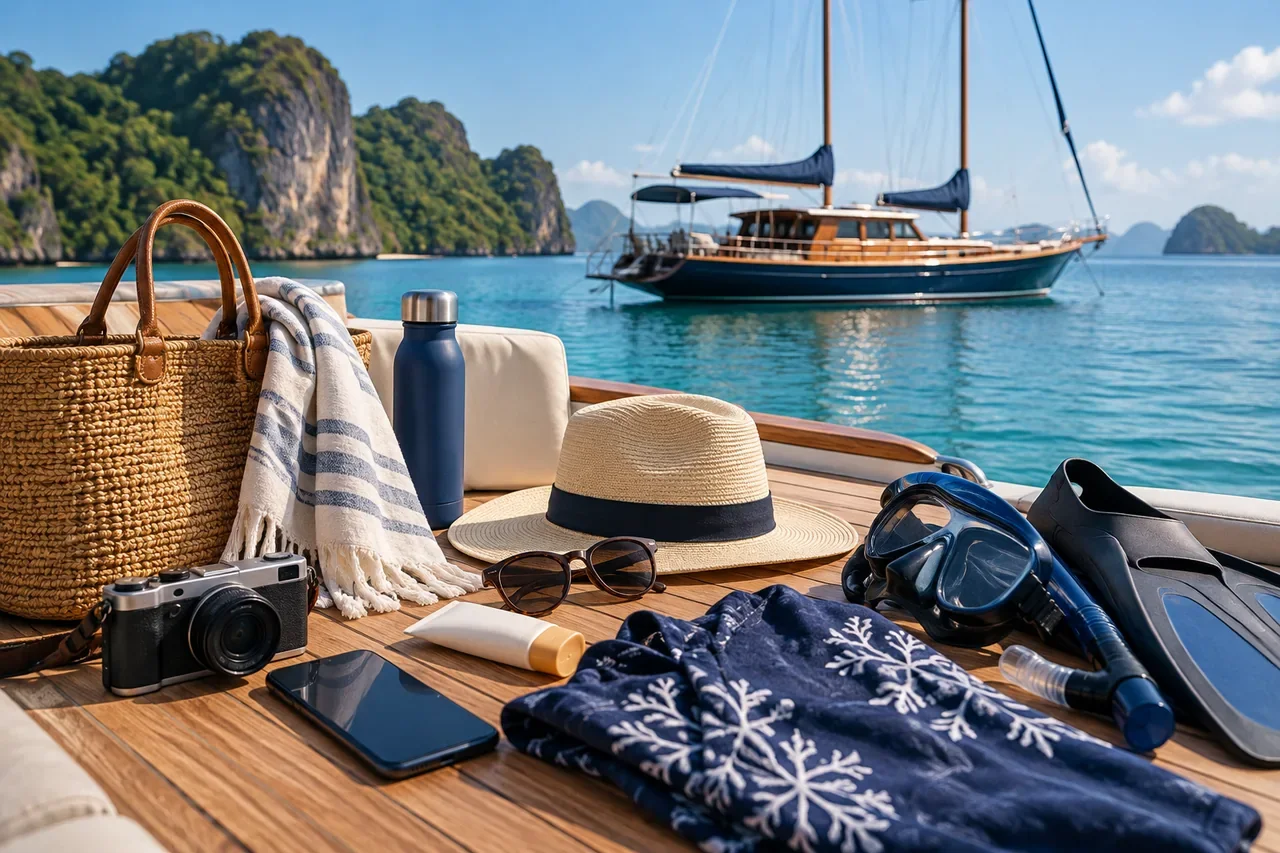
Use the yacht day packing checklist as a starting point, then follow any instructions specific to your outing. Ask what is provided and what guests should bring. Keep personal belongings manageable rather than arriving with unnecessary bags.
Raise motion concerns before the day. The seasickness planning article can help you prepare questions, while advice about medication or a health condition belongs with a qualified professional. No description of a yacht guarantees an individual’s comfort in all conditions.
Tell the team about swimming confidence and preferences. If an activity interests you, read the snorkelling planning guide and confirm the actual arrangements. Guests who prefer to remain aboard should be part of the plan from the beginning.
5. Follow the arrival instructions and listen to the briefing
Give your transport provider the confirmed meeting details and allow a sensible buffer based on the actual journey. Ask the team what to do if travel plans change. Do not assume a particular pier, boarding method or arrival time from another group’s experience.
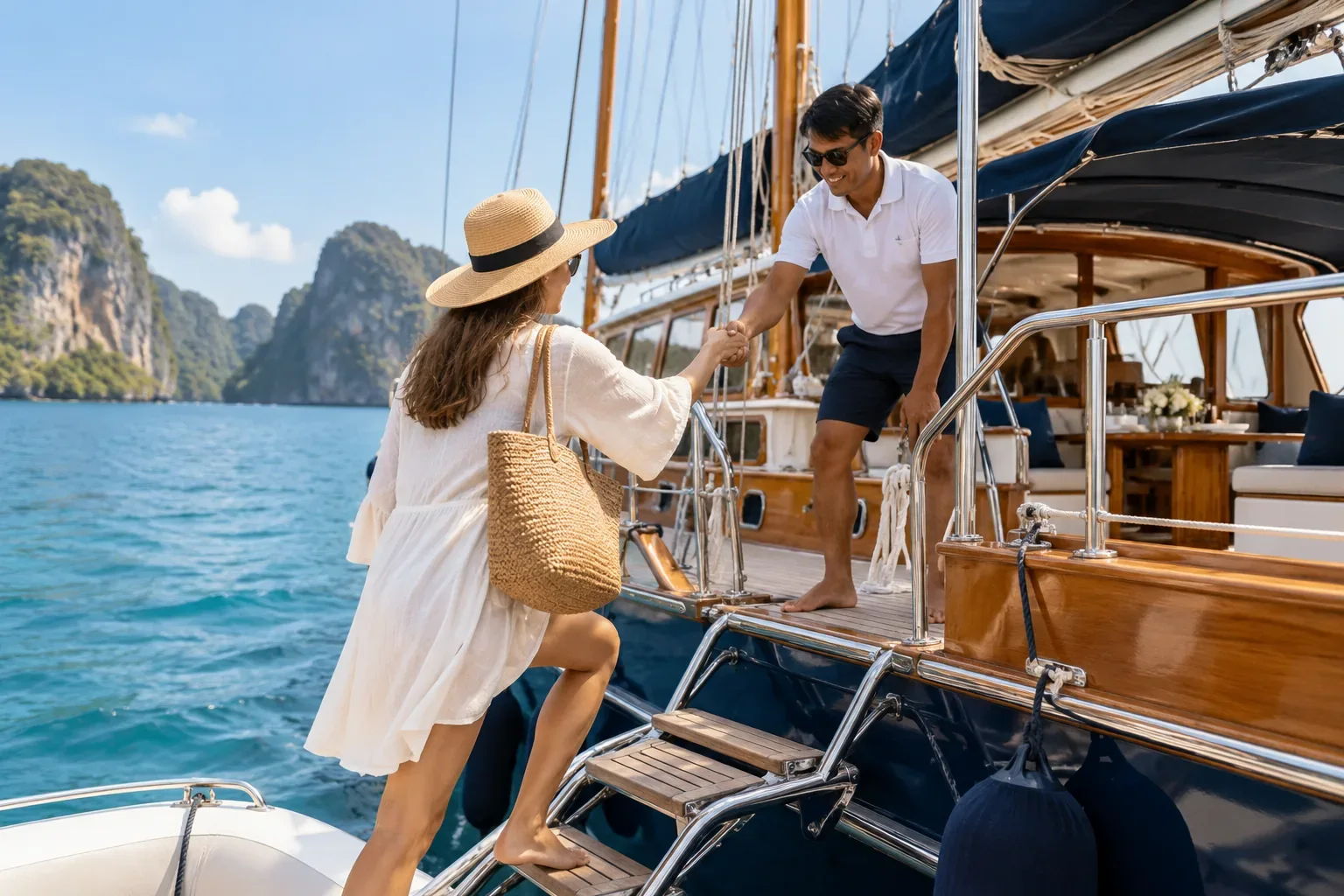
When you arrive, follow the crew’s instructions for boarding and where to place belongings. If a step or movement makes you uncertain, speak up before proceeding. The day is easier to enjoy when practical questions are asked rather than hidden through embarrassment.
Listen to the briefing about movement around the yacht and the proposed activities. Confirm anything you do not understand, especially if earlier messages used unfamiliar terms. The organiser can help gather the group’s attention, while operational instructions should come from the crew.
If you have said that you will remain aboard, make sure the arrangement is understood. Likewise, interest in swimming does not mean entering the water automatically at every stop. Follow the crew’s assessment and instructions for the actual location and conditions.
6. Enjoy the day with realistic expectations
Once aboard, let the outing unfold around the agreed priorities and the captain’s assessment. A route adjustment does not necessarily remove the experience you wanted, particularly if the main purpose was time together, coastal views or a relaxed atmosphere.
Avoid measuring the day only by the number of islands visited. Conversation, changing light and the time between stops can be part of the experience. Give yourself permission to enjoy an unhurried moment rather than treating every pause as an activity that needs to be filled.
Speak to the crew if your comfort or preferences change. You can decline an optional water activity without needing to persuade the whole group. Keep respect for the surroundings in mind too: do not touch coral, feed fish or chase wildlife during any activity.
As the outing concludes, follow the confirmed instructions for disembarking and onward travel. Keep the group’s belongings together and check that everyone understands the next arrangement. A first charter feels simpler when each stage follows clear information rather than assumptions passed from guest to guest.
Frequently asked questions
How does a private yacht charter work?
You enquire with the date, group size and preferred experience, then review the team’s proposal and relevant terms. Confirm the arrangements before travelling, follow the arrival instructions and crew briefing, and keep the route flexible for conditions and the captain’s assessment.
What should I tell the team when I enquire?
Send the date, guest count, occasion and main priority. Mention any boarding questions, swimming preferences or other practical needs early. If unsure about destinations, describe the atmosphere you want and ask the team to propose a suitable outing.
Who chooses the route and anchorage?
Guests can express destination preferences, while the captain assesses the route and anchorage in light of conditions. Ask how flexible elements are communicated and avoid promising a fixed island sequence to the group before the plan is confirmed.
What should I bring on the day?
Follow the team’s instructions and use the linked packing checklist as a starting point. Confirm what is provided rather than assuming equipment, refreshments or other items are included. Keep belongings manageable and ask about anything needed for the specific proposed activities.
Can beginners and non-swimmers join?
Explain ability, confidence and practical needs before booking so the team can discuss suitability and arrangements. State whether you intend to remain aboard. Confirm boarding, equipment and assistance directly, and do not treat participation in water activities as an obligation.
Article imagery is AI-generated for illustration. It does not show the actual Ruangsri yacht, confirmed services, or verified views of specific islands.