

Non-swimmers can start planning a Phuket yacht day by deciding what they would enjoy aboard and telling the charter team about their water confidence before booking. Joining a boat outing does not have to mean joining every proposed water activity.
A useful plan gives equal attention to the people who want to swim and those who would rather watch the scenery, talk or relax in a covered area. Suitability still depends on individual needs, boarding arrangements, the proposed vessel and conditions. Ask practical questions early instead of waiting until the group reaches the water.
Quick Answer
- Tell the team that you do not swim and whether you intend to remain aboard throughout the outing.
- Ask about boarding, movement around the yacht and the equipment and assistance actually available.
- Treat swimming and snorkelling as optional interests to discuss, never an obligation created by the group.
Begin with what non-swimmers want from the day
Think about the parts of a yacht outing that appeal to you without entering the sea. Watching the coastline, enjoying time with friends and seeing an island from the water may be enough. A preference for staying aboard is a useful planning detail, not something to apologise for.
Tell the organiser as well as the charter team. If the rest of the group imagines a day built entirely around swimming, they need to understand your preference while the itinerary is still being discussed. This gives everyone a chance to agree on a shared outing.
Describe concerns specifically. “I do not swim” is different from “I am comfortable on boats but do not want to enter the water,” or “I am worried about the boarding step.” Each statement raises a different practical question for the team to answer.
Ask about boarding before choosing an island
The journey begins with getting aboard, not with the first beach photograph. Ask the team to explain the meeting arrangements and boarding process for the proposed day. If steps, balance or movement are concerns, describe them before confirming the booking.
Do not assume that a yacht photograph shows the actual access method you will use. Nor should a general description of a destination be taken as proof of an easy landing. Ask whether remaining aboard is compatible with the planned stops and how any proposed shore visit would work.
This is also the right time to ask about suitable personal flotation equipment, its fit and the assistance available. Equipment, supervision and access arrangements need direct confirmation. An article cannot establish what will be supplied for your particular group.
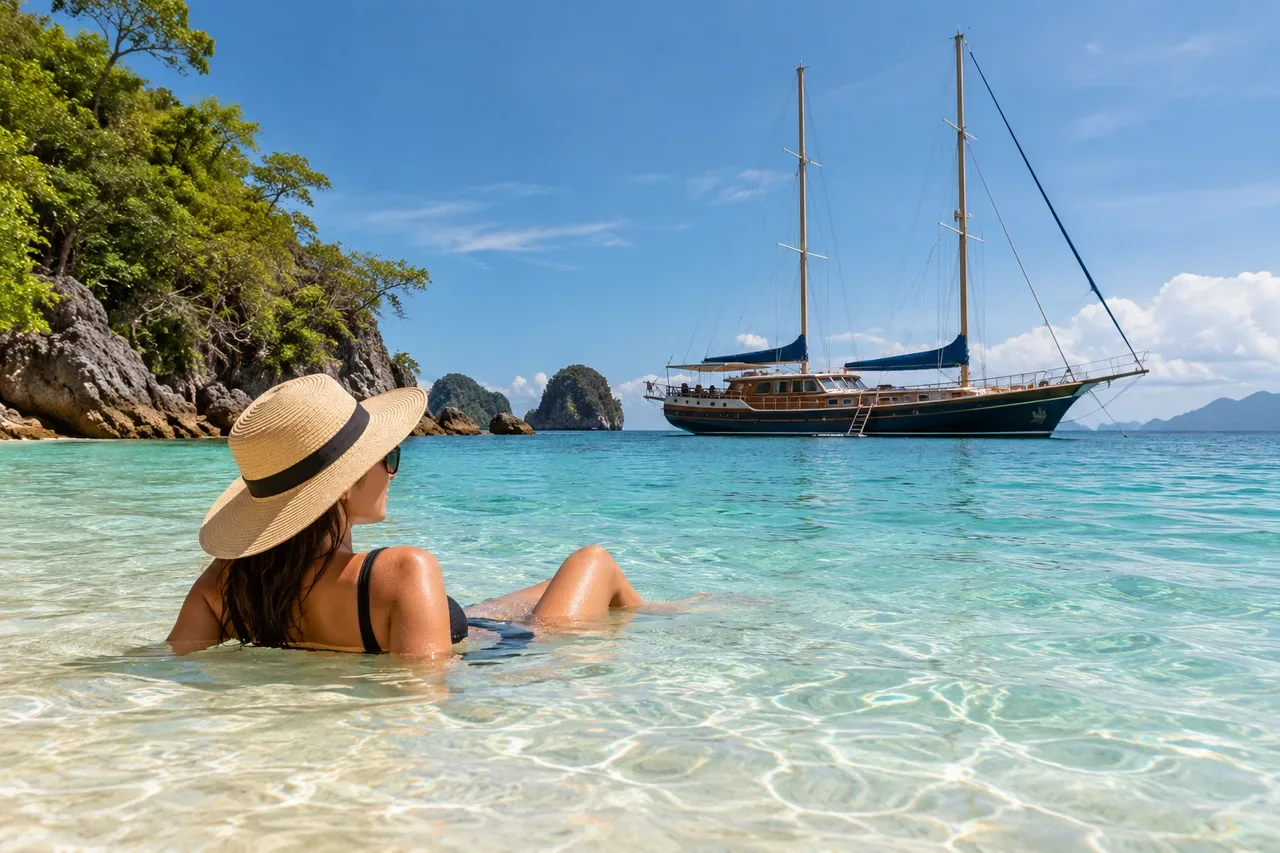
Make remaining aboard a complete plan
People sometimes describe staying aboard as the alternative to the “real” activity. A better group plan includes it from the start. Ask where guests may sit during different parts of the outing and what the crew wants everyone to know about moving around the yacht.
Discuss preferences for covered seating, conversation and watching the surroundings. Do not assume a specific seat is reserved unless the team has agreed it. The number of guests and the day’s arrangements may affect how different spaces are used.
If others are interested in swimming, ask how the group will stay informed about the next part of the outing. Understanding what happens while some guests are in the water can make the day feel less uncertain, without requiring anyone to participate.
Separate swimming confidence from beach appearance
Clear water and pale sand make attractive photographs, but they do not describe currents, depth changes, waves or the conditions at a particular moment. A shallow-looking area is not automatically appropriate for a beginner or someone who cannot swim.
The US National Park Service’s coastal safety guidance stresses checking conditions and staying out when uncertain. Its general caution is useful here; it is not a local assessment of a Phuket beach or a substitute for the captain’s decisions.
Do not let a destination’s reputation override your own stated preference. You can appreciate a bay without entering it. If you are considering a water activity, explain your ability honestly and ask what is appropriate rather than treating an appealing photograph as reassurance.

Understand what snorkelling involves before agreeing
Snorkelling is an activity in the water, not simply a sightseeing option that every guest should try. A mask and snorkel do not resolve a lack of swimming ability. Avoid agreeing to participate solely because other people describe it as easy.
Read the Phuket snorkelling planning guide to understand the questions to raise about the proposed outing. Ask directly about equipment, support and whether the activity suits your ability. Do not assume these arrangements from a general charter description.
If your preference is to stay dry, communicate that clearly and keep it in the plan. You do not need to negotiate a water activity on the day to make the trip worthwhile. The group can enjoy different aspects of the same setting.
Choose the outing around the whole group
A route conversation should include both keen swimmers and guests who will remain aboard. Describe the group’s balance of interests before requesting several stops. A simpler outing may give everyone more time to enjoy their preferred part of the day, subject to the team’s proposed arrangements.
The Coral Island guide and Khai island guide introduce destination ideas. Use them to discuss scenery and the character of an outing, not to select a location based on an assumed level of water safety.
For a broader route discussion, explore island hopping from Phuket. The captain’s choice of route and anchorage depends on conditions, while access and activity arrangements need confirmation for the day you are considering.
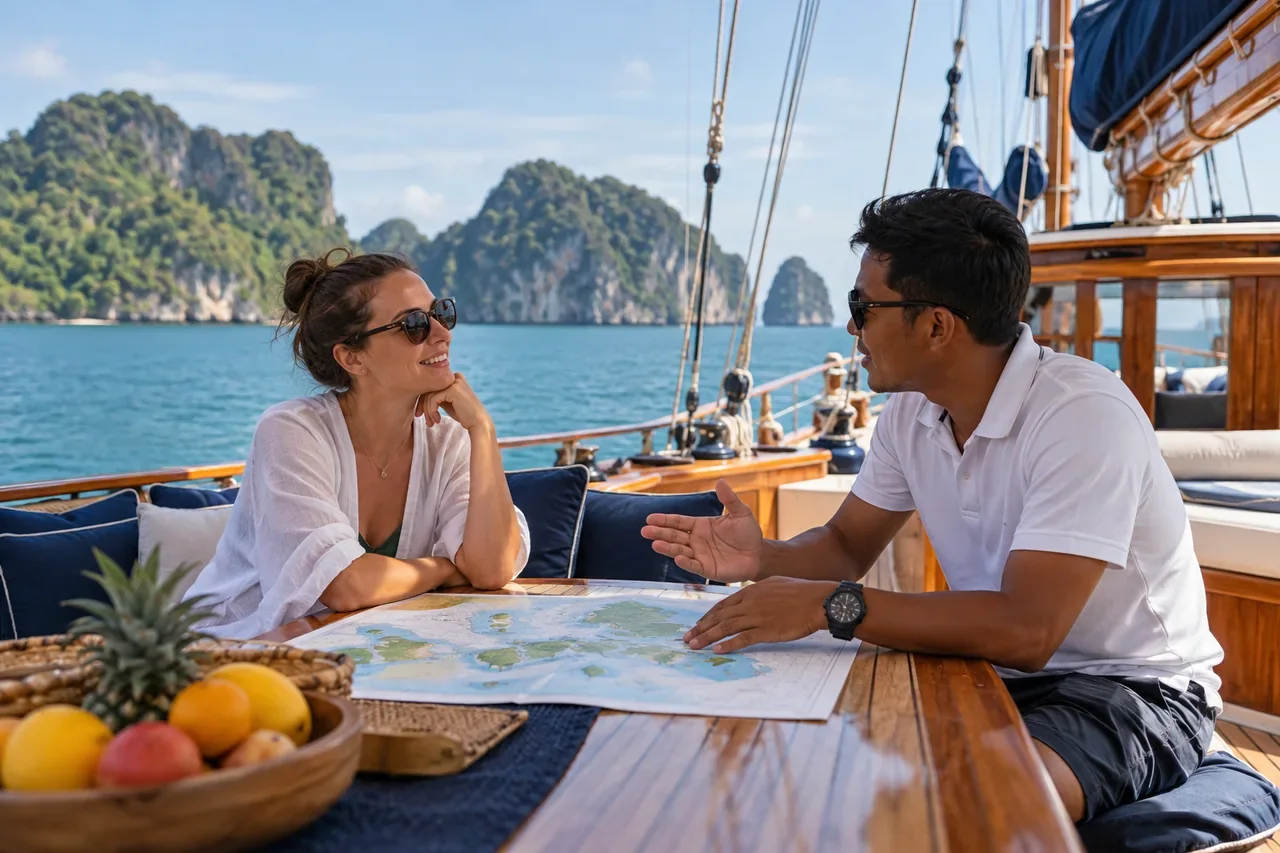
Prepare for comfort and clear communication
Ask the team what to bring, then use the yacht day packing checklist as a starting point. Keep personal belongings manageable and follow the crew’s advice about where to place them. Avoid carrying so much that moving around becomes awkward.
If motion is a concern, read the seasickness planning guide and discuss the proposed outing with the team. Questions about medication or a health condition should go to an appropriate healthcare professional. No vessel description can guarantee that an individual will not feel motion.
Agree a simple way to speak up if your comfort changes. Tell a crew member rather than relying on a friend to guess how you feel. You can change your mind about an optional activity without needing to justify it to the whole group.
Send a practical enquiry before committing
An effective enquiry includes the date, guest count, preferred kind of outing and a clear description of swimming ability. Add whether everyone intends to remain aboard or only some guests do. Mention boarding concerns separately so they receive a specific answer.
| Question to ask | Why it matters |
|---|---|
| How will boarding work? | It helps you assess the access arrangements |
| Can I remain aboard at the proposed stops? | It makes your preference part of the itinerary |
| What equipment and assistance are available? | It replaces assumptions with confirmed information |
| How may the route change? | It establishes realistic expectations about conditions |
Read the response carefully and ask again if an important point remains unclear. A suitable outing is one whose practical arrangements you understand, rather than one that persuades you to ignore a concern.
Frequently asked questions
Can non-swimmers join a yacht day?
Explain your ability and plans to the team before booking so they can discuss suitability and arrangements. A yacht outing can include enjoying the scenery aboard, but boarding, movement, equipment and any support needed must be confirmed for the individual enquiry.
What should I ask the crew before boarding?
Ask how boarding and movement around the yacht will work, where you should sit, and how to raise a concern. Confirm any flotation equipment or assistance discussed beforehand. Follow the crew’s briefing rather than relying on assumptions from photographs.
Is shallow water at some islands easier for beginners?
Water that looks shallow can still have changing depth, currents or waves. Do not use appearance as a suitability test. Tell the crew your ability, ask about the actual conditions and remain out of the water if uncertain.
How do I stay comfortable if I feel nervous on a boat?
Describe your concern early and ask for a clear explanation of the day’s arrangements. Plan activities you actually want to do and speak to the crew if your comfort changes. Medical questions require advice from a qualified professional.
Do I have to go in the water at all?
State that you wish to remain aboard when enquiring and ask the team to confirm how that fits the proposed itinerary. Swimming should not be treated as a social obligation. Your group’s plan should respect different preferences from the beginning.
Article imagery is AI-generated for illustration. It does not show the actual Ruangsri yacht, confirmed services, or verified views of specific islands.